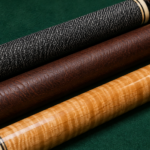
Most players don't think about their wrap until it starts working against them. The grip goes glassy where your hand sits, a thread starts lifting near the collar, or you pick up a used cue and the wrap feels like it's been through a few hundred league nights, because it has.
When that happens, you have a decision to make that's bigger than "replace it with the same thing." A rewrap is the one point in a cue's life where you can change how the grip feels, how it ages, and how the cue looks, all without touching the parts that determine how it hits.
I've been doing Irish linen rewraps on the bench here in Central Massachusetts, and the same questions come up with almost every job: Should I stay with linen? Is leather better? What about going wrapless? And which color won't look dirty in six months? This article goes through all of it.
What the Wrap Actually Does (and What It Doesn't)
The wrap is the grip section of the butt, the stretch between the two collars just below where your back hand sits. If you need a refresher on where everything is, our pool cue anatomy guide breaks down every section of the cue.
What the wrap does:
- Gives your back hand a consistent surface to hold, shot after shot
- Manages moisture from your hand so the cue doesn't slip or stick
- Sets the hand feel: texture, a bit of give or none at all, and grip diameter
What the wrap doesn't do, at least not in any way you'd notice:
- Change the hit. Deflection, feedback, and the sound of the cue are determined by the shaft, tip, ferrule, and joint, not the grip.
- Meaningfully change the balance. A wrap is a thin layer of material spread over several inches. Swapping one type for another is not going to move your balance point enough to feel during a stroke.
That second point matters because players sometimes avoid a rewrap they need, worried it'll "change the cue." It won't change how it plays. It will change how it feels in your hand, which is usually the point.
The Three Options at a Glance
| Irish Linen | Leather | Wrapless | |
|---|---|---|---|
| Feel | Textured, dry, consistent | Smooth to slightly tacky, some give | Smooth, firm, direct |
| Moisture handling | Absorbs and wicks hand moisture | Varies by leather and finish; can get slick or sticky | Depends on your hand; finish doesn't absorb |
| How it ages | Wears evenly, darkens, gets softer in texture | Can compress, stretch, or crack; finish wears unevenly | Finish wears at the hand position |
| Look | Classic; dozens of solid and speckled color combinations | Premium; embossed and exotic options | Shows off the butt wood |
| Best for | Most players, especially if your hands run warm | Players who want a softer, cushioned grip | Players with dry hands, or who wear a glove |
There's no wrong choice here. It's about matching the grip to your hand and your playing conditions.
Irish Linen: Why It's the Default for a Reason
Irish linen is a woven linen thread wound tightly around the butt under tension. It's what you'll find on a large share of production and custom cues, and that's not tradition for its own sake.
It handles sweat better than anything else. Linen absorbs moisture from your hand and lets it dissipate. Leather and bare finish can't do that the same way. If your hands get damp by the third rack of a long match, linen is the most forgiving option.
It wears evenly. Leather tends to compress where your hand applies pressure, so you end up with a dip or a shiny patch. Linen keeps its texture longer and wears more uniformly. When it does wear, it gets a little smoother and darker, more like a well-used rope than a broken-in glove.
It's predictable. The texture gives your hand a reference point without being grippy enough to grab. You can hold the cue loosely and still know exactly where it is, and that's what you want from a back-hand grip.
The trade-offs:
- It shows grime, especially in lighter colors (more on that below).
- It picks up chalk and oil over the years, and at some point cleaning stops helping.
- Some players find the texture a little coarse at first, though most stop noticing it within a session or two.
The New England angle: humidity and linen
Here in Central Mass., we go from muggy August league nights to bone-dry heated rooms in January. Linen is far less sensitive to that than a wood shaft is, but you'll notice it. A linen wrap can feel slightly tackier in summer and a little smoother and drier in winter. That's normal.
What's not normal is a wrap that feels like a completely different surface from season to season, or one that loosens or develops gaps as the weather changes. That usually points to a tensioning or finishing problem from the original install, not the linen itself.
Leather: When It Makes Sense
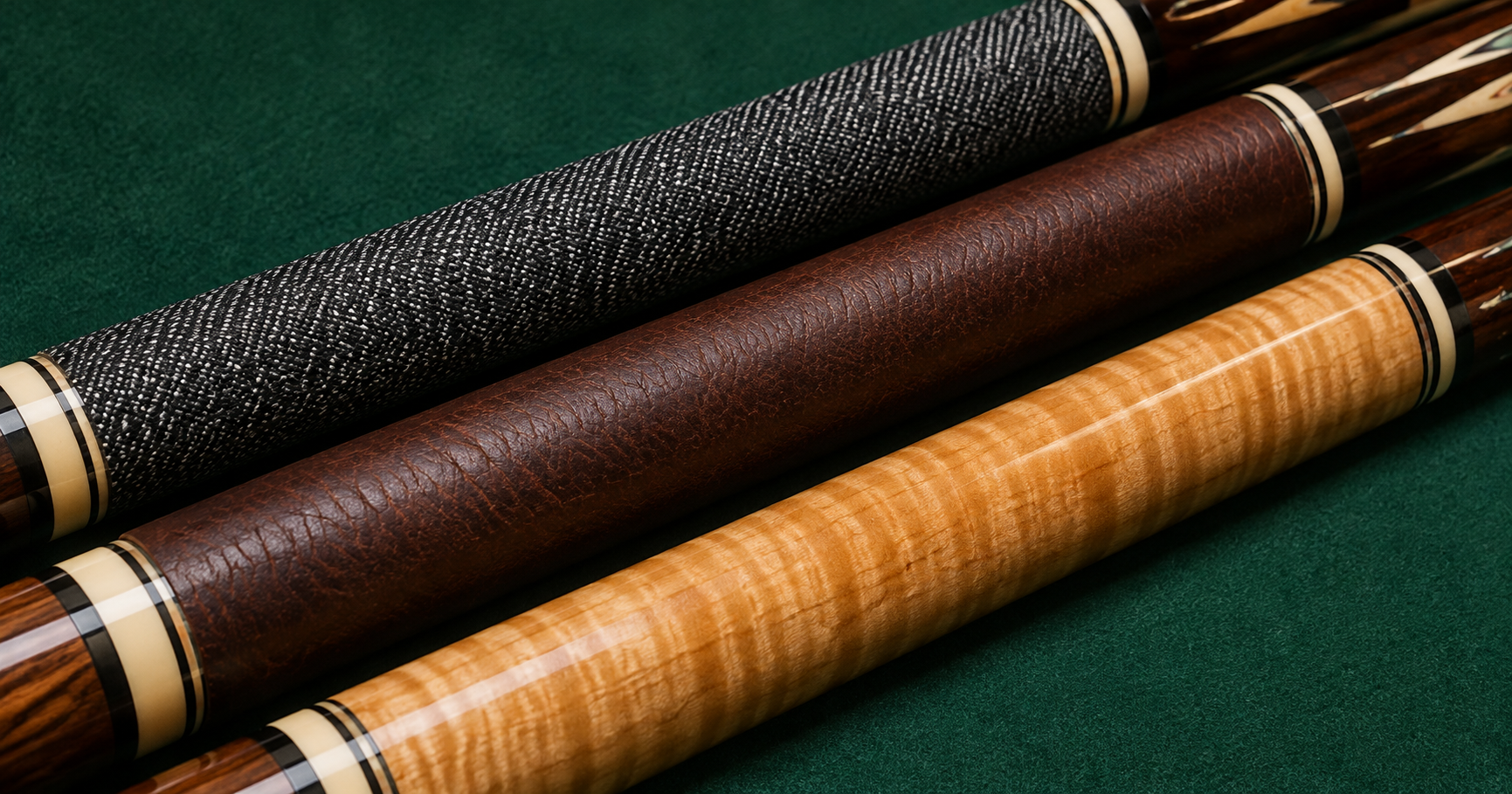
Leather wraps range from standard cowhide to embossed leather and exotics like lizard or ostrich. They look sharp, and a quality leather wrap has a slightly cushioned feel some players love.
To be upfront: I install Irish linen only. I don't do leather wraps. I'm covering leather here because plenty of cues come in wearing one, and you should know how it compares before you decide what's next for your cue.
Leather is a good fit if:
- You like a softer, more padded grip
- Your hands stay fairly dry
- The look of the cue matters to you, and you want a specific premium aesthetic
Where leather tends to fall short:
- Uneven wear. Leather compresses under your hand. Over time you can get a soft spot or a shiny patch at your grip position.
- Moisture behavior. Depending on the leather and its finish, a sweaty hand can make it slick, or occasionally sticky.
- Aging. Leather can dry out, crack, or stretch and lift at the seams, especially with big seasonal humidity swings.
If your leather wrap is worn out, you have two paths:
- Switch to Irish linen. I can do this. The old leather and all its adhesive come off completely, the surface is prepped, and the linen goes on fresh. Players who switch usually say the grip feels more consistent, especially in summer.
- Stay with leather. You'll want a cue maker or repair shop that specializes in leather wraps. I'm happy to point you in the right direction, and the cue repair tech directory is a good place to start.
Wrapless: The Clean, Direct Option
A wrapless cue has no grip material at all. Your hand rests on the finished wood of the butt. It's common on sneaky petes and on cues where the maker wants the wood itself to be the showpiece.
Wrapless works well if:
- Your hands run dry
- You play with a glove
- You like a firm, direct feel with nothing between you and the cue
The downside is simple: if your hands sweat, a finished wood surface gives the moisture nowhere to go. Some players love wrapless in winter and hate it in July.
One note: converting a wrapped cue to wrapless isn't just "remove the wrap." The wrap area on most cues is set up specifically to receive a wrap, so leaving it bare isn't usually a clean result without additional work. If you're thinking about a conversion, bring the cue in and we'll talk through what's realistic for that specific cue.
How to Choose a Linen Wrap Color
This is the part people overthink, and also the part they enjoy most. Here's how I'd approach it.
1. Decide how much grime you can live with
This is the most practical factor, and the one people forget.
- Black, dark brown, burgundy, and dark blue hide hand oils and chalk the best. If this is your daily player and you're not careful about washing your hands between racks, go dark.
- White and light colors look fantastic on day one and show every chalk mark by month three. If you want a light wrap, consider antique white, which has a warmer, off-white tone that hides discoloration better than bright white.
- Speckled (two-color) wraps, like black with white or black with green, are the sweet spot for many players. The speck breaks up the surface visually, so wear and grime are much less obvious.
2. Pull a color from the cue itself
The best-looking rewraps tie into something already on the cue:
- The color of the points or inlays in the forearm
- The ring work at the collars or joint
- The butt sleeve wood or veneers
A walnut-brown wrap on a cue with dark wood points, or a burgundy speck against cocobolo, looks like it came from the maker. A random color can look like an afterthought.
3. Think about the cue's role
- Your main playing cue: Prioritize grime tolerance and feel. Go dark or speckled.
- A break or jump cue: These take a beating. Dark and durable wins.
- A collector piece or restoration: Match the original wrap color if you know it, or choose what's period-appropriate for the cue.
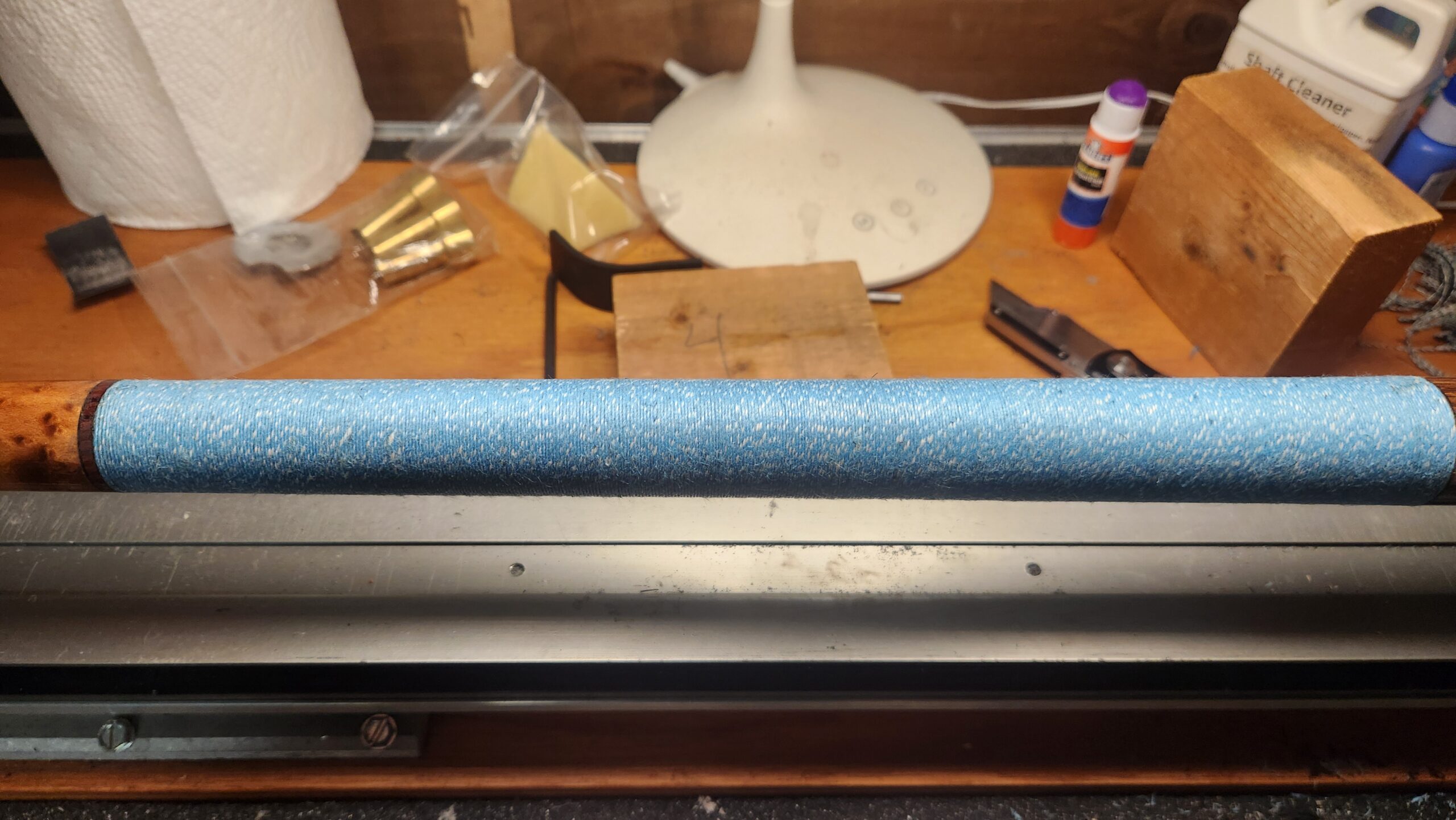
- A cue you just want to have fun with: This is where purple, light blue, or a bold speck makes sense.
4. Browse the actual swatches
I keep an Irish linen color library on the wrap replacement page with over 30 solid and speckled options, and you can search by color to narrow things down. Where I have them, I've added photos of finished cues so you can see how a color looks once it's wound on a real butt, not just as a flat swatch.
Two quick cautions:
- Screens lie. Monitor and phone color settings vary, so treat the swatches as a guide. If you're torn between two close colors, let me know and I'll confirm with you before the job starts.
- Linen darkens slightly with use. Hand oils and time deepen the color a bit, especially on lighter shades. Pick with that in mind.
Signs It's Time for a Rewrap
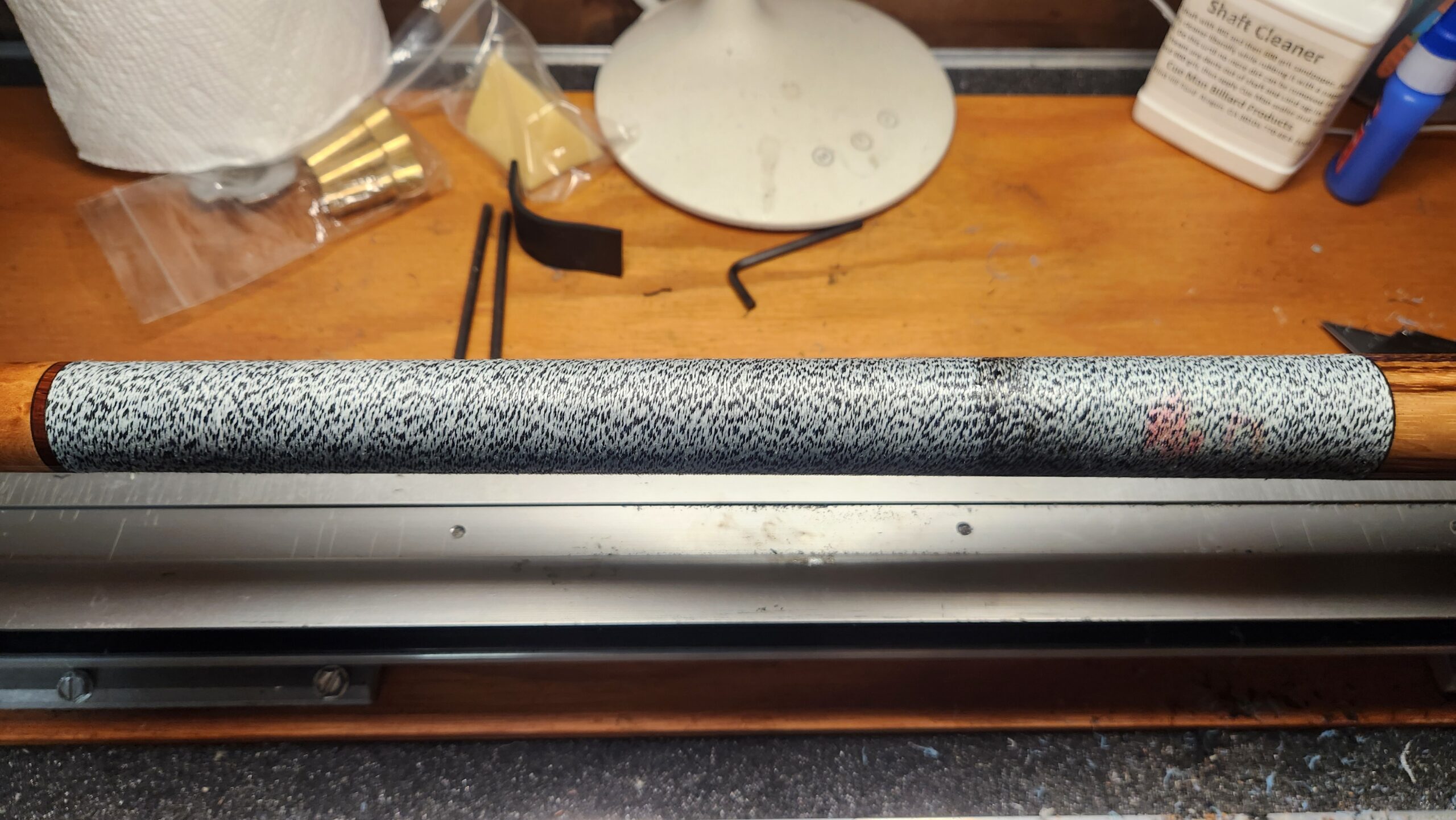
You don't need to wait until the wrap is falling apart. Consider a rewrap if you notice:
- Slick or glassy spots where your back hand rests
- Loose threads, gaps, or lifting at either collar
- The wrap has shifted or rotated on the butt, a sign the adhesive has let go
- Discoloration or grime that doesn't come out with gentle cleaning
- Your grip feels inconsistent, and you find yourself squeezing harder to hold the cue steady
That last one is subtle. A slick wrap often makes players tighten their grip without realizing it, and a tight grip is one of the fastest ways to lose a smooth, straight stroke. If your cue just "feels off" lately, the wrap is worth a look alongside the tip. We cover the other usual suspects in why your cue feels different.
Wrap gone slick? Most rewraps are same-day or next-day.
Caring for a Linen Wrap So It Lasts
A good linen wrap can go for years. A few habits help:
- Wash your hands before you play, and use a hand towel during long sessions.
- Wipe the wrap occasionally with a clean, barely damp cloth, then let it air-dry fully before casing the cue.
- Skip harsh cleaners and solvents. They can strip the finish and break down the linen.
- Keep chalk off your back hand. Chalk transfer is one of the main reasons light wraps discolor.
- Don't leave the cue in a hot car or a damp basement. That's good advice for the shaft, too.
What a Professional Rewrap Involves
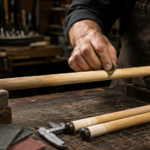
A wrap job looks simple from the outside, but most of the result comes down to prep and tension. Here's how I do it:
- Strip the old wrap and all of the adhesive down to the substrate.
- Clean and prep the surface so the new wrap seats evenly.
- Wind the linen under consistent tension from collar to collar.
- Finish the collar ends so there's no visible gap or overlap.
- Check the grip for consistent diameter and feel before the cue goes back to you.
Step 4 is where you can tell a careful job from a rushed one. Look at both ends where the wrap meets the collars. They should be tight and clean, with no thread ends, gaps, or bunching.
While the cue is here, it's a good time to check the tip and ferrule, and to recondition the shaft if it hasn't been done in a while. Doing it all in one visit saves you a second trip.
One scope note: wrap work is butt-section only. I don't do joint, pin, or structural butt repairs. If I see damage outside that scope during inspection, I'll tell you plainly so you can take it to a shop that specializes in that work.
Ready for a Rewrap?
If your wrap has gone slick, started lifting, or you're just ready for a new look, browse the Irish linen colors and pick a few favorites. Then send a repair request, choose Irish Linen Wrap as the work type, and mention the color you're leaning toward.
I serve players in Worcester, Marlborough, Framingham, Shrewsbury, Northborough, and the surrounding Central Massachusetts area.
Frequently Asked Questions
Is Irish linen better than leather for a pool cue wrap?
For most players, yes. Irish linen handles hand moisture better, wears more evenly, and keeps a consistent texture over time. Leather can feel softer and looks premium, but it tends to compress at the grip position and can turn slick or sticky with sweaty hands.
Do you install leather wraps?
No. I install genuine Irish linen wraps only. If you have a worn leather wrap, I can remove it and replace it with linen. If you want to stay with leather, you'll need a shop that specializes in leather wraps.
Will a new wrap change how my cue hits?
No. The hit comes from the shaft, tip, ferrule, and joint. A new wrap changes the hand feel, not the hit or the balance in any way you'd notice during play.
Can I switch from a leather wrap to Irish linen?
Yes. The leather and all the old adhesive are removed completely, the surface is prepped, and the linen is installed fresh.
What color Irish linen wrap hides dirt best?
Dark solids like black, walnut brown, and burgundy hide grime best. Speckled two-color wraps such as black with white are also very forgiving. Bright white shows dirt fastest; antique white is a more practical light option.
How long does an Irish linen wrap last?
It depends on how often you play and how clean your hands are, but a well-installed linen wrap typically lasts years. Replace it when the grip goes slick, threads loosen, or the wrap shifts.
How long does a rewrap take?
Most wrap replacements here are same-day or next-day, depending on the shop schedule. You'll get a firm estimate after I've looked at the cue.