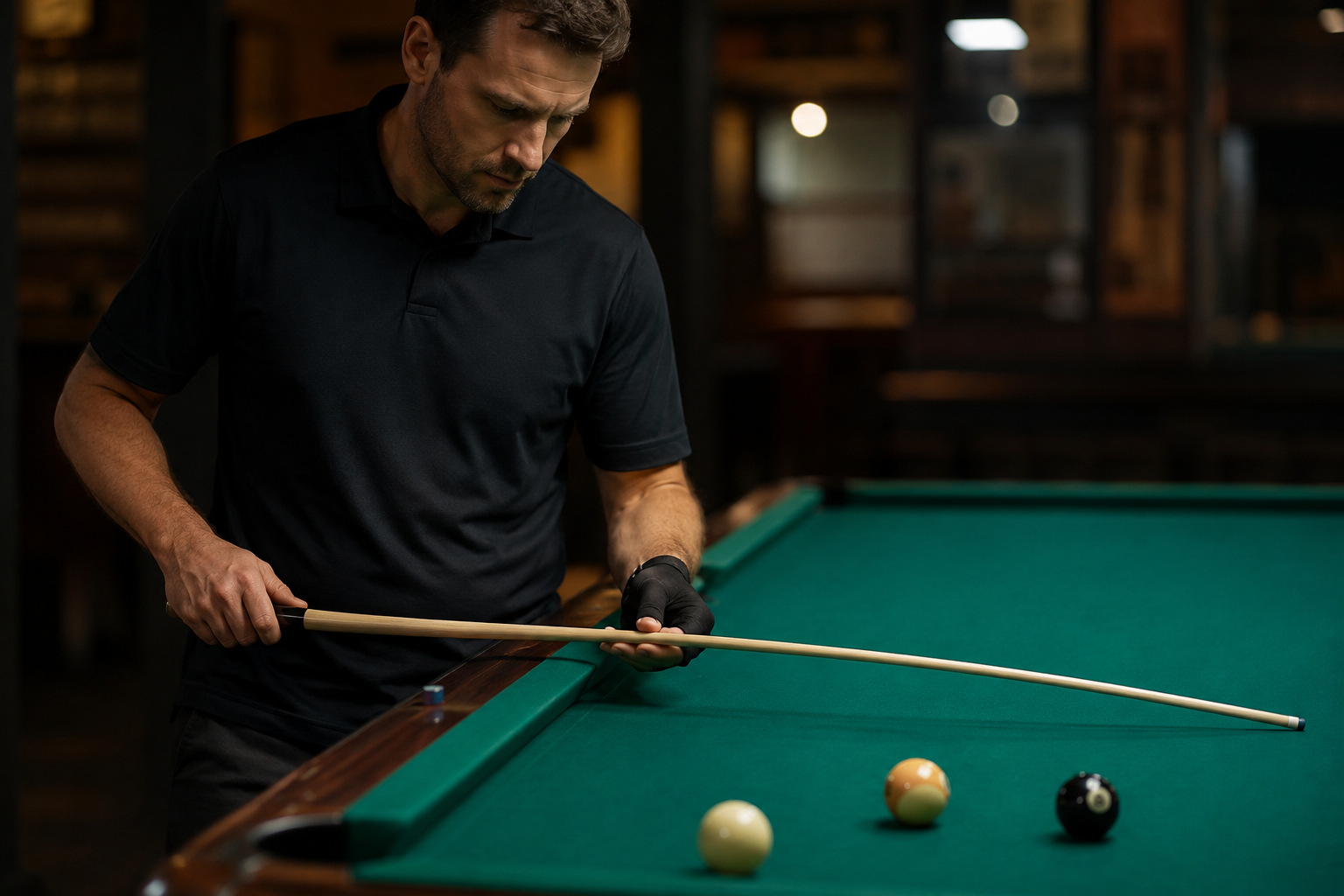
There’s a specific moment every pool player dreads – you’re lining up a straight shot you’ve made a hundred times, and the cue ball drifts. Not because you hit it wrong. Because something about the stroke felt off from the moment the tip made contact.
Before you start rethinking your fundamentals, take a look at your cue. A warped shaft can introduce subtle inaccuracies that are nearly impossible to compensate for, no matter how good your mechanics are. The frustrating part is that warp tends to develop gradually. It doesn’t happen overnight, and by the time you notice something’s wrong, the cue may have been pulling your shots for weeks.
Here’s how to check your cue properly, what causes warping in the first place, and what your options are if you find a problem.
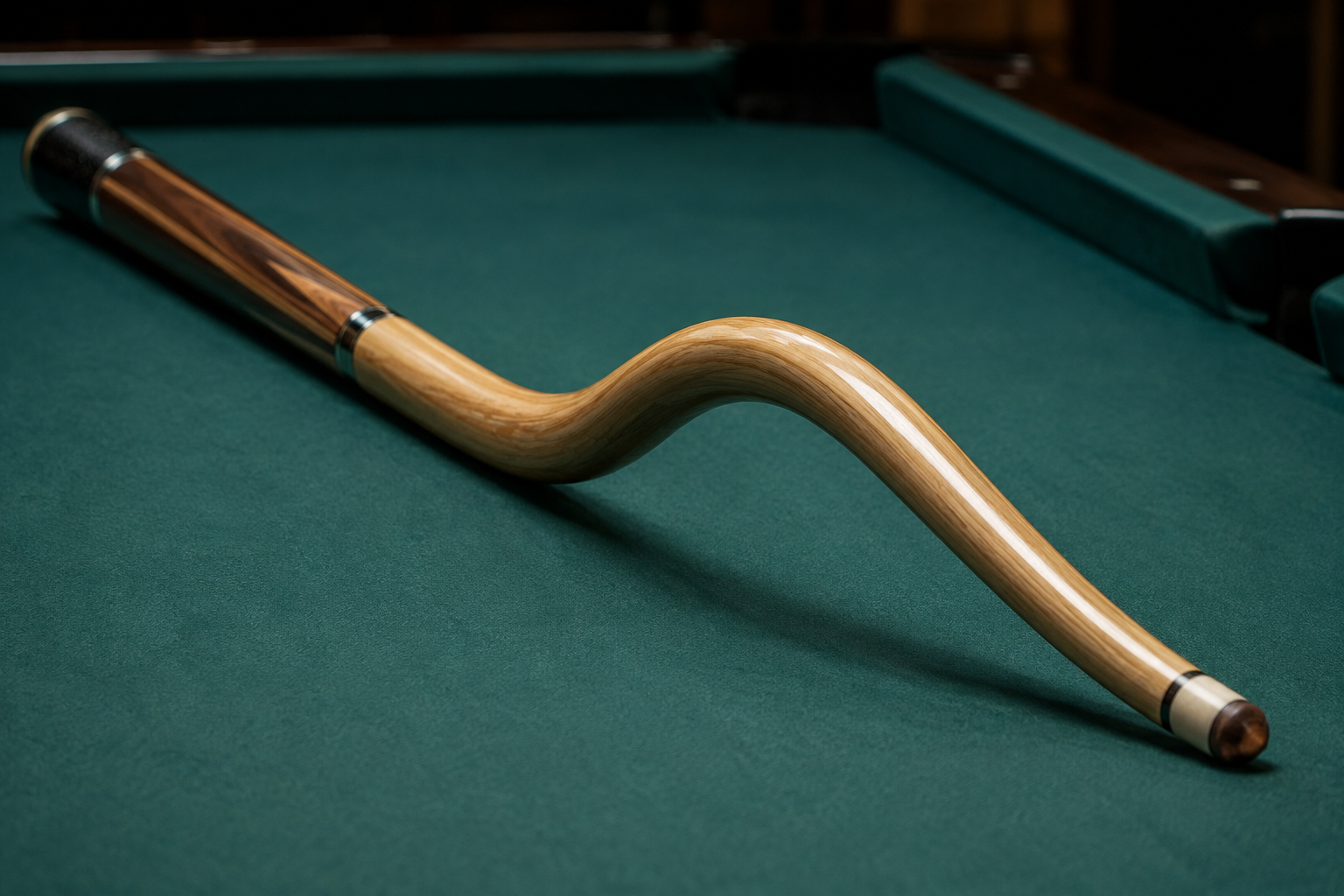
Why Pool Cues Warp
A pool cue shaft is, at its core, a thin column of wood – and wood responds to its environment. Moisture, temperature, and improper storage are the three primary culprits behind a warped cue, and all three tend to work together.
When humidity rises, wood fibers absorb moisture and swell. When the air dries out, they contract. If that expansion and contraction isn’t uniform across the shaft – because one side is exposed to more moisture than the other, or because the cue is under some kind of lateral stress – the shaft can begin to curve.
This is particularly relevant in New England. If you’re playing or storing your cue in Central Massachusetts, you’re dealing with some of the most variable humidity and temperature swings in the country. A cue left in a car trunk through a humid July, or leaning against a cold exterior wall through a January weekend, is under real stress. Over time, that stress adds up.
A few other common causes worth knowing:
Leaning the cue against a wall. This is probably the most common way a cue gets warped. When a cue leans at an angle for extended periods – especially in a warm or humid room – gravity and the cue’s own weight can slowly introduce a bend. It seems harmless, but it’s one of the most consistent ways players damage a shaft over time.
Improper storage in a soft case. A soft case protects against dings and scratches, but it offers no structural support. If a soft-cased cue gets pinched, sat on, or stored at an angle for a long period, the shaft can develop a set.
Heat exposure. Trunks of cars in summer, storage areas near heating vents, spots near windows with direct sun – any of these can soften the wood fibers enough that the shaft takes on a new shape. Once the damage is done, cooling down doesn’t necessarily undo it.
Age and use. Even well-maintained cues can develop subtle warp over many years of play. Every stroke puts rotational and lateral force on the shaft. Most well-made cues handle this without issue, but cheaper shafts or cues with inconsistent grain can show movement over time.
How to Check Your Cue for Warp
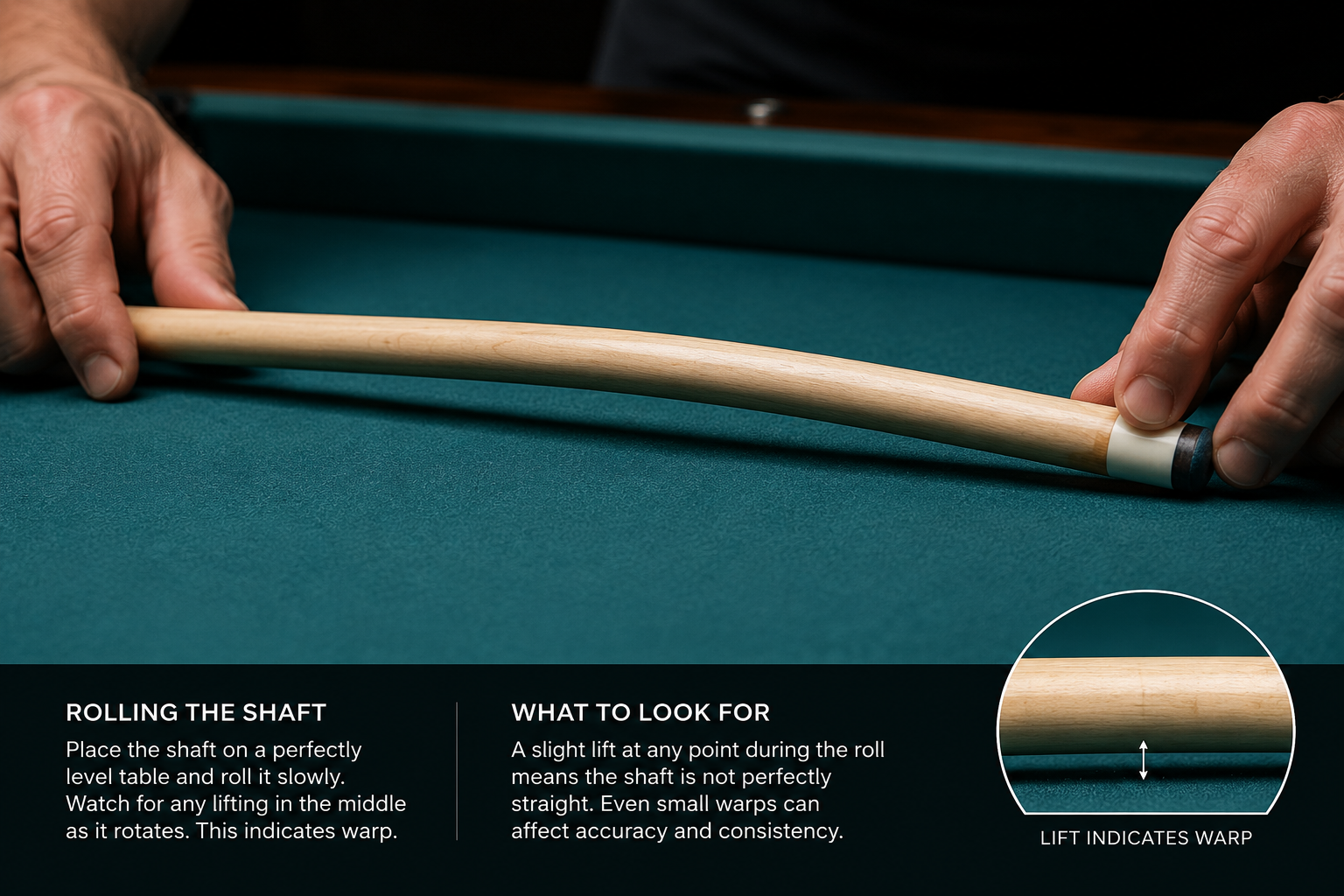
The standard method is the rolling test, and it’s simple enough to do in a few minutes.
What you’ll need: A flat, level surface. A pool table is ideal. A solid wood floor or a long workbench will also work. You’re looking for a surface long enough to support the full length of the shaft.
Step 1: Remove the cue from its case and let it rest at room temperature for 15 to 20 minutes if it’s been in a cold car or storage area. You want the wood to be at a stable temperature before you test it.
Step 2: Separate the cue at the joint if it’s a two-piece. You want to test the shaft on its own.
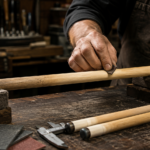
Step 3: Set the shaft on the flat surface and give it a slow, gentle roll. Use your fingertips to push it from one end, and watch it roll from the side.
What you’re looking for: A straight shaft will roll smoothly and evenly, with the ferrule end and the joint end staying at consistent heights the whole way. A warped shaft will wobble, rock, or visibly rise and fall as it rolls. The tip end may dip to one side, or you may see a wave travel through the shaft as it moves.
Step 4: Do it more than once. Roll it in the same direction, then roll it back. Watch from different angles – eye-level from the side, and then from directly behind as it rolls away from you. A consistent wobble that shows up on every pass isn’t a surface irregularity; it’s real.
Step 5: If you see something that concerns you, hold the shaft up to eye level and sight down it from the butt end toward the tip, the same way you’d look down a gun barrel. Rotate the shaft slowly as you do. You’re looking for any arc or deviation in the wood grain. A straight shaft will look perfectly centered as you rotate it. A warped one will show a subtle drift or lean in one direction.
How Bad Is It? Understanding Severity
Not every warp is the same, and the severity makes a significant difference in what you should do next.
Minor warp is a very slight deviation – something you can only detect with the rolling test or by sighting carefully down the shaft. You may not feel it at all during play, especially on shorter shots. Minor warp in a recreational cue isn’t necessarily cause for alarm, though it’s worth monitoring.
Moderate warp will produce a noticeable wobble in the rolling test and a visible arc when you sight down the shaft. At this level, you’ll likely feel it. Shots requiring precise english or a straight follow through will start to feel inconsistent. If your cue is at this stage and it’s a cue you care about, it’s worth having a professional look at it.
Significant warp is obvious. The rolling test will show an exaggerated rock or wave, and sighting down the shaft will reveal a clear, visible curve. A cue with significant warp is actively working against your game on every shot. Trying to compensate for it through stroke adjustments is a losing strategy – you’re introducing errors to correct for errors.
One thing worth noting: a mild warp sometimes isn’t in the shaft at all. A loose or slightly misaligned joint can create the appearance of warp when you sight down the cue assembled. Always test the shaft separately. If the shaft rolls clean but the assembled cue looks off, the joint is worth inspecting.
Can a Warped Cue Be Fixed?
Sometimes, yes – though it depends on the degree of warp and the construction of the shaft.
Minor to moderate warp in a solid wood shaft can often be addressed through a professional shaft reconditioning process. This involves carefully applying controlled heat and pressure to coax the wood fibers back toward straight, followed by refinishing the shaft surface to restore its feel and playability. It’s not a DIY process – attempting it without the right tools and technique can make the warp worse, or cause the shaft to crack.
Significant warp, or warp in a shaft that’s already been heat-damaged or has structural compromise, is a different situation. At some point, reconditioning a badly warped shaft isn’t the right call – a new shaft is a better investment. A professional can tell you quickly which category you’re dealing with.
Layered carbon fiber shafts are generally more warp-resistant than solid wood, but they’re not immune – especially if they’ve been exposed to sustained heat. The good news is that warp in carbon fiber is less common and, when it does occur, is usually less severe.
If you’ve been noticing symptoms like inconsistent tip contact, drifting cue ball, or an uncomfortable stroke feel, it’s worth ruling out warp as the cause before assuming it’s a tip issue.
Storage Habits That Prevent Warping
Once you’ve confirmed your cue is straight – or after it’s been reconditioned – keeping it that way is largely about storage.
Use a hard case. A hard case provides structural support that a soft case simply can’t. If you’re serious about your cue, this is the single most effective thing you can do to protect it during transport and storage.
Store it vertically, tip up. Storing a cue horizontally puts it under low-level sustained stress, especially if it’s resting on supports at only two points. Vertical storage with the tip facing up is the standard recommendation from most cue manufacturers.
Keep it away from temperature extremes. Don’t leave your cue in a car overnight in January or July. Don’t store it near a heating vent, a woodstove, or in direct sunlight. Aim for a stable indoor environment – somewhere around 65 to 75 degrees Fahrenheit with moderate humidity.
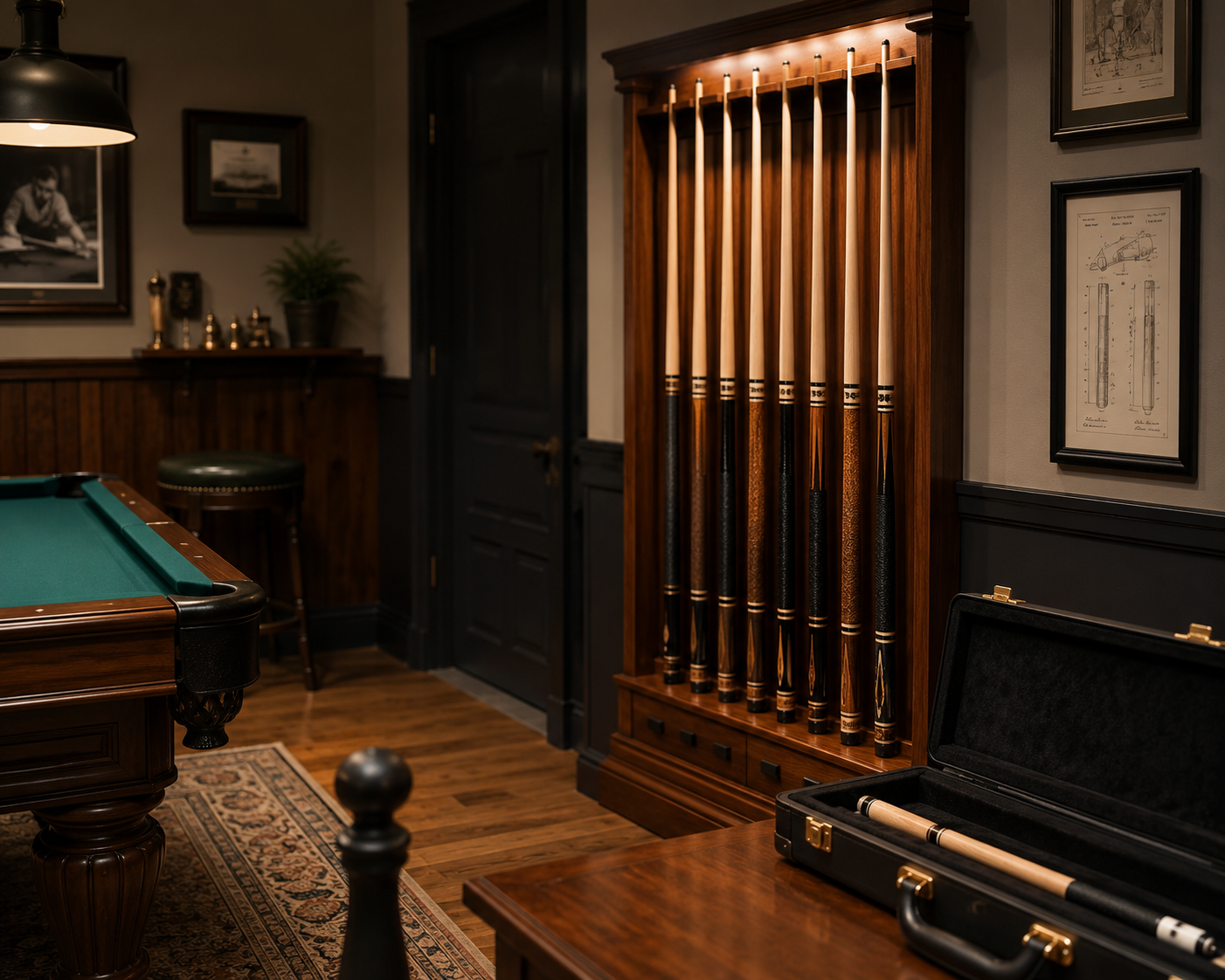
Don’t lean it. This one’s hard to avoid at a pool hall, but if you’re storing a cue at home, lean-proofing its storage location is worth the small effort. A proper wall rack that holds the cue fully vertical – not at an angle – is far better than propping it in a corner.
Is It the Shaft or the Joint? Isolating the Real Problem
Here’s a scenario I see fairly often: a player rolls the shaft by itself, it comes back perfectly clean, and they’re relieved – but the cue still doesn’t feel right assembled. The cue ball still drifts on the same shots. Sighting down the assembled cue still shows something that looks like a curve.
At that point, the shaft isn’t your problem. The joint is.
A two-piece cue is held together by a pin – usually a metal insert threaded into the butt, seating into a corresponding insert in the shaft – with the two joint faces pulled flush against each other. That connection has to be precise. If the pin is worn, if one of the joint faces has developed a slight gap, or if the cue has been cross-threaded at some point from being forced together at an angle, the shaft can sit fractionally off-axis from the butt even though both halves are individually straight. Sighted down as an assembled cue, that off-axis seating looks exactly like a warp. It isn’t one – it’s a mechanical alignment issue, and it plays very differently than a fix.
There’s also a less common possibility worth ruling out: the butt itself can develop a warp, independent of the shaft. It’s rarer, because the butt is thicker, heavier, and usually reinforced, but it does happen – most often in the forearm section of a wood butt that’s spent years leaning at an angle or sitting in a rack under uneven support.
The way to sort out which of these you’re actually dealing with is to run the rolling test three separate ways instead of one:
1. Roll the cue fully assembled first. This is your baseline. Note whether it wobbles, and if so, how much.
2. Separate the joint and roll the shaft alone. This is the test covered above. If the shaft rolls clean here, you’ve already ruled out the most common cause.
3. Roll the butt alone, the same way. Set it on the same flat surface, give it the same slow push, and watch it from the same angles you used on the shaft. Most players skip this step entirely, but it’s the one that tells you whether the problem is upstream of the joint.
Once you’ve got results from all three, here’s how to read them:
- Shaft wobbles, and the assembled cue wobbles the same way – this is a genuine shaft warp. The section above on reconditioning applies.
- Shaft rolls clean, butt rolls clean, but the assembled cue still wobbles – this points to the joint itself: a worn pin, a joint face that’s no longer sitting flush, or adhesive breakdown inside the insert from heat exposure over time. Neither half is warped; they’re just not meeting correctly. A cue smith can re-pin a cue if it needs it.
- The butt wobbles on its own – less common, but this means the warp is in the butt, typically the forearm, not the shaft at all.
- More than one of these shows wobble independently – you’re dealing with a compound issue, and it’s worth having someone look at the whole cue rather than guessing at which fix to try first.
I want to be upfront about something here: joint and butt work is outside the scope of what I take on. My work is focused on shafts – reconditioning, tip and ferrule replacement, that kind of thing. If your three-part test points to a joint or alignment problem rather than a shaft warp, that’s a different repair path, and it’s worth finding a cue smith who specifically handles joint and butt work rather than assuming it’s something a shaft fix will resolve.
The value of running all three tests isn’t just diagnosing the problem correctly – it’s making sure that if you do bring the cue in somewhere, you’re bringing it to the right person for the right job the first time.
When to Bring It In
If your rolling test shows a consistent wobble, if you’re sighting down the shaft and seeing a noticeable curve, or if your game has developed an unexplained consistency problem that you can’t attribute to your stroke, it’s worth having the shaft professionally evaluated. While I do not specifically do this type of work, a cue smith that takes on more cue maintenance than I do may be able to help you.
A quality cue is an investment. It’s worth knowing what you’re dealing with before writing it off.
Frequently Asked Questions
How can I tell if my pool cue is warped? The most reliable method is the rolling test. Remove the shaft from the joint and roll it slowly across a flat, level surface. A straight shaft rolls evenly without wobbling. A warped shaft will rock or wave as it rolls, and the tip end may visibly dip or drift. You can also sight down the shaft from the butt end – rotate it slowly and watch for any arc or deviation from center.
What causes a pool cue to warp? The most common causes are humidity changes, heat exposure, and improper storage. Wood absorbs and releases moisture as conditions change, and if that happens unevenly across the shaft, it can cause a curve to develop over time. Leaning a cue against a wall, leaving it in a hot car, or storing it in a soft case without structural support are all contributing factors.
Can a warped pool cue be fixed? Minor to moderate warp in a solid wood shaft can often be corrected through professional shaft reconditioning, which uses controlled heat and pressure to straighten the wood. Significant warp or structural damage may make a new shaft the better option. A professional evaluation is the right first step – attempting to fix it at home risks making the warp worse or cracking the shaft.
Will a warped cue affect my game? Yes, particularly on shots that require precision. A warped shaft introduces a directional bias into every stroke, which means the cue ball won’t travel where your mechanics tell it to. This is especially noticeable on straight follow shots, draw with left or right english, and any shot where you’re making fine adjustments based on feel. Trying to compensate through stroke changes just adds more variables to an already inconsistent situation.
How do I know if it’s my shaft or my cue’s joint that’s warped? Run four checks: roll the assembled cue, roll the shaft alone, roll the butt alone, and hand-check the pin for play by gently rocking and twisting the assembled joint. If the shaft wobbles on its own and the assembled cue wobbles the same way, it’s a shaft warp. If the shaft and butt both roll clean individually but the assembled cue still wobbles and the pin has noticeable play, the problem is a worn pin or insert – not a warp at all. If the pin feels solid but the assembled cue still wobbles slightly, it’s more likely a joint face that’s no longer seating flush. If the butt wobbles alone, the warp is in the butt rather than the shaft.
How do I prevent my pool cue from warping? Store your cue in a hard case, keep it vertical with the tip facing up, and avoid exposing it to temperature extremes or prolonged humidity changes. Don’t lean it against walls for extended periods. In New England especially, keeping your cue in a stable indoor environment – away from exterior walls, heating vents, and vehicles – goes a long way toward protecting the shaft over the long term.