Most players don't think about their cue tip until something goes wrong. A miscue here, some inconsistent spin there — and suddenly they're wondering what happened to a cue that used to feel dialed in.
What changed, more often than not, is the tip. Not dramatically. Just gradually, through normal use and a few preventable habits, until performance quietly slipped away.
The good news is that tip degradation is largely manageable. A few minutes of regular care between replacements will keep your tip playing at its best, extend its useful life significantly, and help you avoid those frustrating stretches where your game feels inexplicably off.
Here's what you actually need to know.
Why Tip Condition Affects Everything Downstream
Before getting into the how, it's worth understanding the why — because once you see how much the tip influences, the maintenance habits make a lot more sense.
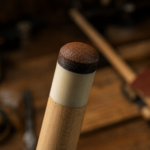
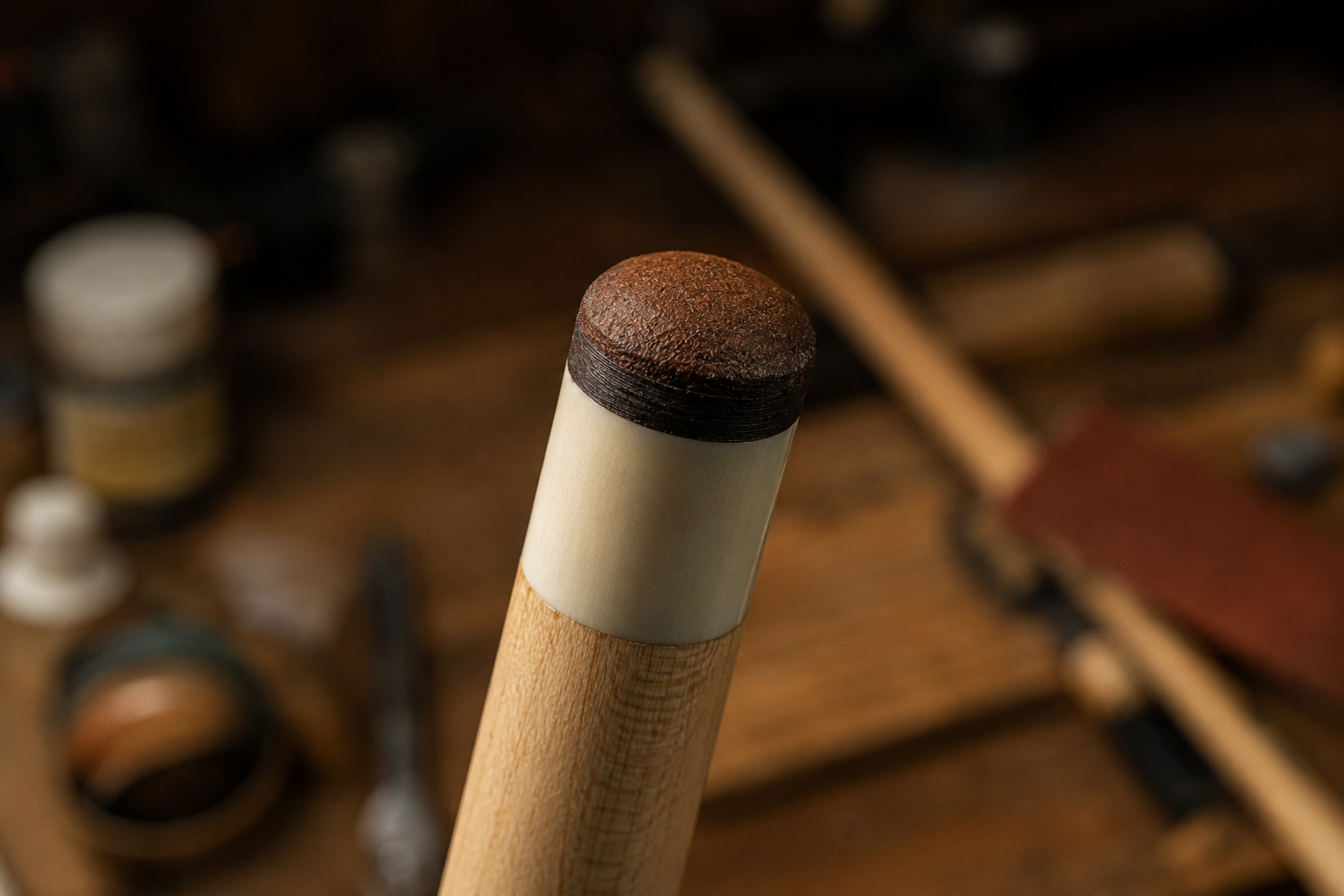
Your cue tip is the only part of your equipment that ever touches the cue ball. Everything you're trying to do — draw, follow, side spin, a precise stop shot — has to pass through that small disc of leather. Its shape determines how accurately your cue contacts the ball. Its texture determines how well it holds chalk. Its hardness determines how much feel and feedback you get from each shot.
When all three of those things are in good order, the tip almost disappears — it does its job transparently and your stroke translates cleanly into results. When any one of them degrades, you're fighting your own equipment without realizing it.
If you've ever wondered why you suddenly can't seem to get english on the ball the way you used to, the tip is almost always the first place to look. (For a broader look at what can shift in a cue's performance over time, see Why Your Cue Feels Different Than It Used To.)
The Three Ways a Tip Degrades
Understanding how tips fail makes it much easier to catch problems early and know what to do about them.
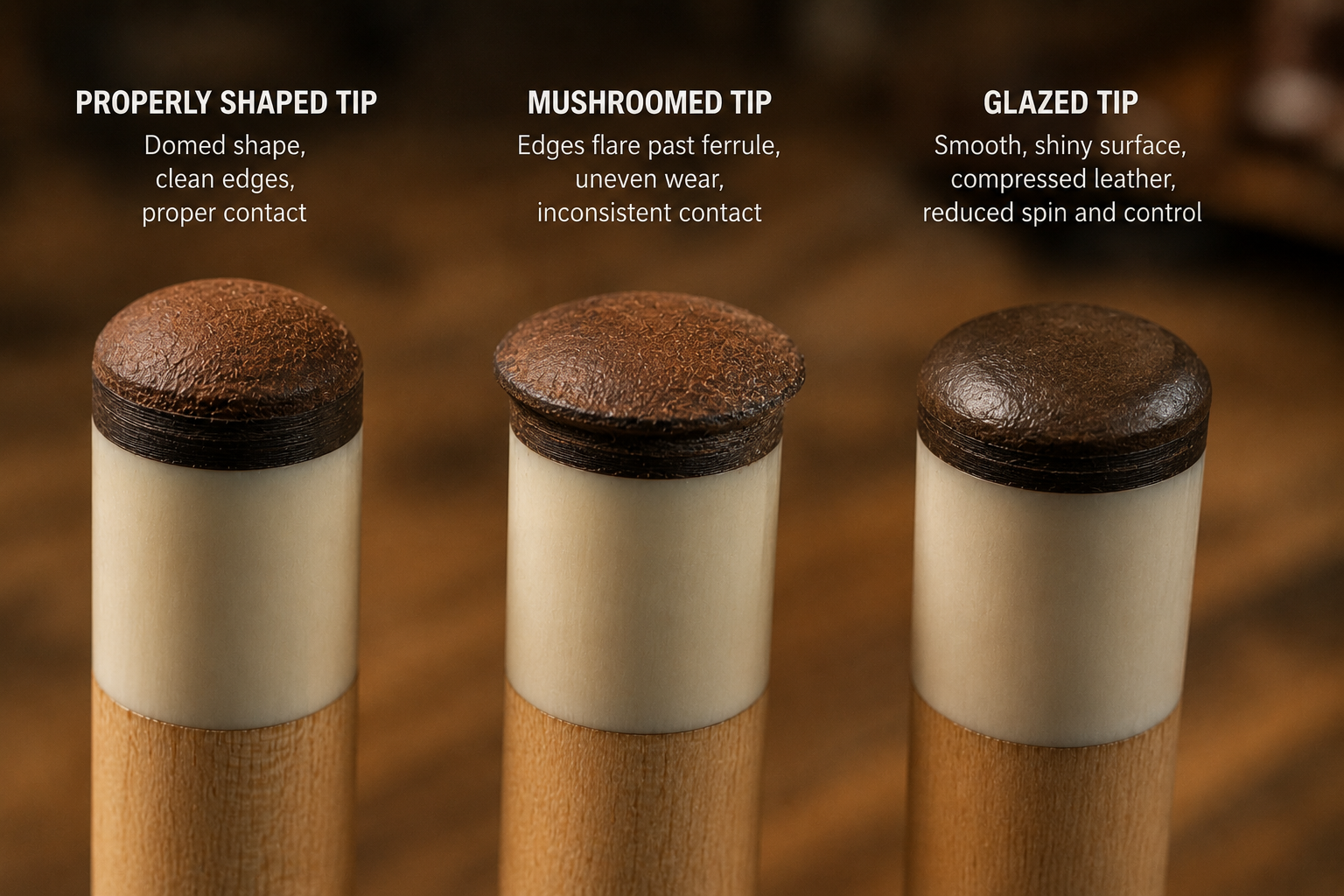
Flattening happens naturally with use. Tips start with a curved profile — typically shaped to match the radius of a nickel or dime. That dome is what allows the tip to make consistent, centered contact with the cue ball even when your stroke is slightly off-center. As the tip wears down, the dome flattens, and that contact window shrinks. Flat tips also retain chalk poorly, since chalk tends to sit in the curve rather than on a flat surface.
Glazing is a surface-level problem, but it has a real impact on performance. Over time, repeated chalk application and contact with the cue ball compresses and polishes the leather surface until it becomes hard and smooth — almost glassy. A glazed tip can't hold chalk the way it should, which means more miscues and less reliable spin. You can often identify it by running a thumbnail across the surface: if it feels slick instead of slightly rough, it's glazed.
Mushrooming occurs when the sides of the tip spread outward past the edge of the ferrule. This usually happens from excessive side pressure — aggressive strokes, heavy english, or simply a tip that's been on too long. Mushroomed edges are unsupported, which makes the tip feel soft and inconsistent. They can also catch the ferrule on contact, which is bad for the ferrule and the tip both.
How to Properly Shape Your Tip
Keeping the right profile on your tip is the single most impactful maintenance habit you can build.
A nickel-radius curve is a good general-purpose shape for most players — it offers a balance of control and chalk retention. Some players, particularly those who play a lot of finesse position play, prefer a slightly tighter radius (closer to a dime). Either way, you want a consistent, smooth dome — not too flat, not too extreme.
The right tool for this is a tip shaper, which you can find at most billiard supply shops. It's a small device with a curved sanding surface that gently removes material in the right arc. Run it lightly over the tip in smooth passes until the profile looks right, then stop. Don't overwork it — you're refining a shape, not sculpting from scratch.
A few things to avoid:
- Don't use a pocket knife or razor blade to trim the tip. It's easy to take off too much or introduce an uneven edge.
- Don't sand aggressively. Tips have limited material, and every shaping session removes a little. Gentle, infrequent correction is the right approach.
- Keep the shaper off the ferrule. The ferrule edge is easy to nick, and a damaged ferrule is a separate repair entirely.
If you notice mushrooming — the sides spreading past the ferrule — trim those edges carefully before reshaping. The tip should sit flush with or very slightly inside the ferrule edge.
How to Scuff and Condition Your Tip
Shaping handles the profile. Scuffing handles the surface.
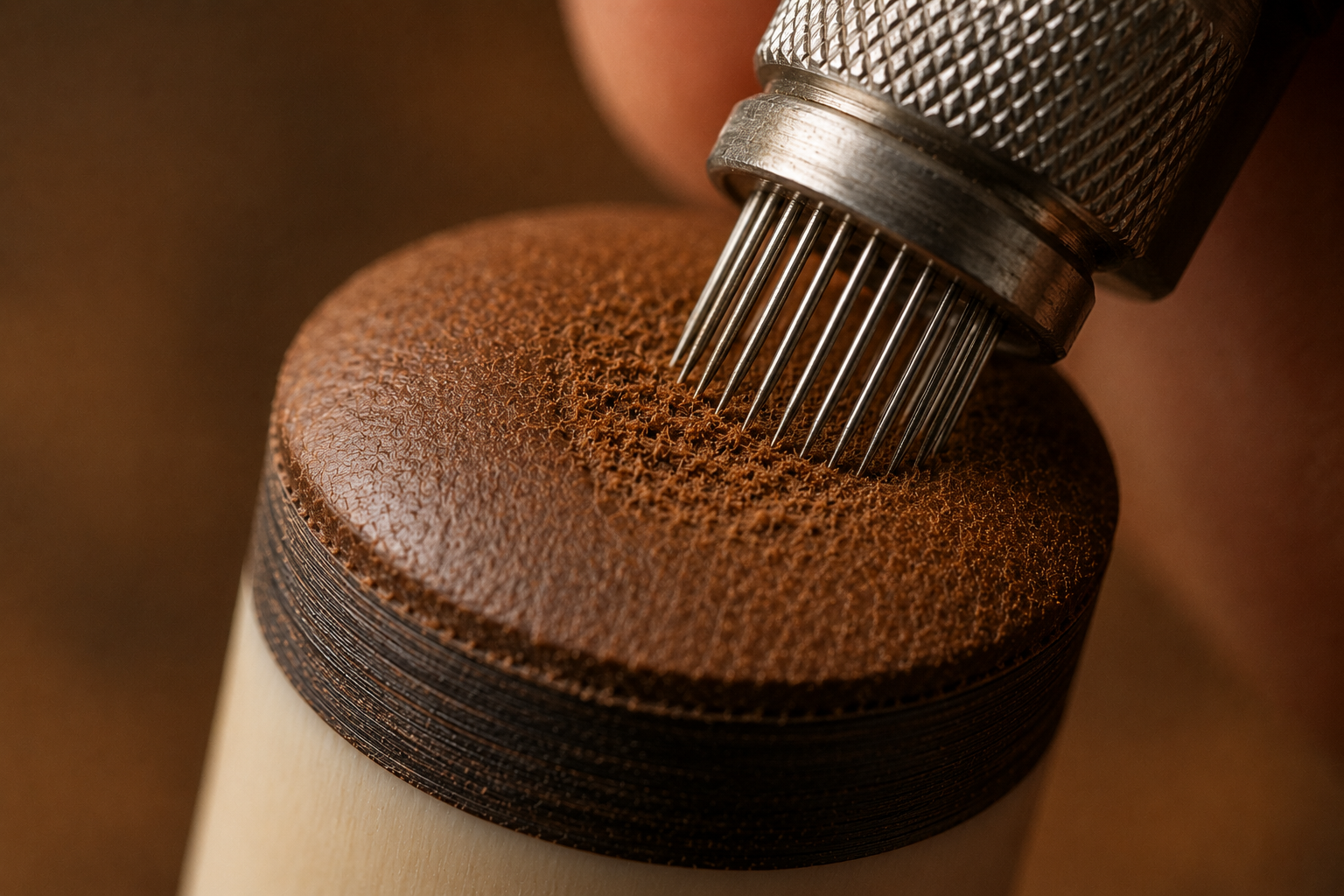
A properly scuffed tip has a slightly rough, open texture that grabs chalk and holds it through contact with the cue ball. When a tip glazes over, that texture is gone — chalk sits on the surface rather than into it, and it comes off on the first contact.
A tip pick or scuffer — a small tool with needle-like or abrasive surfaces — restores that texture by opening up the leather fibers. A few light passes across the face of the tip is all it takes. You're not trying to dig into the leather; you're just breaking up the polished surface so chalk has something to hold onto.
How often should you do this? It depends on how much you play and what tip you're using. Softer tips tend to need less frequent scuffing because they don't glaze as readily. Harder tips, especially layered leather tips like Kamui, can glaze faster if they're not attended to. A light scuff every few sessions is a reasonable habit for most players. If chalk stops sticking even after you've applied it, that's your signal to scuff.
Chalking the Right Way
This one surprises people, but how you apply chalk matters — both for performance and for how long your tip lasts.
The right technique is a gentle, rolling motion across the tip surface, making contact with the whole face of the tip evenly. Apply it lightly, don't grind. The goal is a thin, even layer that fills the texture of the tip — not a thick coating that sits on top of it.
What a lot of players do instead is twist the cue into the chalk repeatedly, grinding it in. This actually does two things you don't want: it wears down the tip surface faster than normal, and it creates a buildup of chalk residue in the center of the chalk cube that makes it less effective over time.
You also don't need to chalk before every single shot. A good chalk application holds through several shots if your tip is in proper condition. Chalking compulsively is a habit, not a maintenance strategy.
One more thing: chalk brand matters more than most players realize. Quality chalk like Kamui Black or Master chalk adheres more evenly and cleanly than bargain-bin options. If you're using a premium tip and mediocre chalk, you're leaving performance on the table.
Storage and Environmental Factors
Tips don't just degrade from use — they're affected by how and where you store your cue.
Leather is sensitive to humidity. In a humid environment, a tip can swell and soften. In a very dry environment, it can dry out and crack. Neither extreme is good for tip life or consistency. Storing your cue in a hard case rather than a soft bag offers some protection against humidity swings, and keeping it out of extreme environments — hot cars, damp basements, unheated spaces in winter — goes a long way.
New England's climate, with its pronounced seasonal swings between humid summers and dry heated winters, is genuinely harder on cue equipment than many players realize. If you're storing your cue in a garage or leaving it in a car through the winter, don't be surprised when your tip behaves differently in February than it did in October.
When Maintenance Isn't Enough
Regular maintenance extends tip life — it doesn't make a tip immortal.
At some point, the tip will be too thin to safely shape further, too compressed to restore with scuffing, or simply worn out. When you see the tip getting very thin relative to the ferrule, or when performance is inconsistent even after you've scuffed and shaped it, that's the signal. Continuing to play on a tip that's past its life means playing on a tip that might come loose mid-game, or worse, that might allow the ferrule to make contact with the cue ball directly — which is damaging to the ferrule and terrible for your game.
The honest threshold: if you're doing maintenance work and your game still doesn't feel right, the tip needs to go. A fresh, properly installed tip on a clean ferrule will often transform the feel of a cue that's been running on a worn-out one for too long.
(Not sure whether your tip needs maintenance or a full replacement? Reach out with a photo and I'll tell you what I'm seeing.)
Frequently Asked Questions
How often should I replace my cue tip? For a casual player who plays a few times a week, once a year is a reasonable expectation. League players and regular competitors often replace every six to nine months. If you're noticing performance changes before that window, your tip is probably telling you something. The condition of the tip matters more than a fixed schedule.
Can I shape my tip at home, or should I leave it to a professional? Basic shaping and scuffing at home is completely reasonable with the right tools. A quality tip shaper and tip pick are inexpensive investments. What you want to avoid is attempting to re-glue a loose tip, trim a damaged ferrule, or install a new tip yourself — those jobs are best left to someone with experience, because mistakes can damage the ferrule or shaft.
Does tip hardness affect how quickly it wears? Yes — softer tips tend to compress and flatten faster, which means more frequent shaping. Harder tips resist flattening better but are more prone to glazing if you're not scuffing them. There's a tradeoff either way, which is why matching tip hardness to your playing style matters. (For a full breakdown, see our guide to choosing the right cue tip.)
What's the best way to store a cue to protect the tip? Upright in a hard case, away from extreme temperatures and humidity. Avoid storing the cue resting on its tip — even brief pressure in the wrong direction can affect the profile over time.
My tip looks fine but my game feels off. Could the tip still be the issue? Absolutely. Glazing, in particular, can make a tip look perfectly normal to the eye while significantly affecting how it holds chalk and contacts the ball. If chalk isn't staying put, the tip surface isn't right — even if it looks okay from a distance.