Pool Cue Anatomy
The Complete Guide to Pool Cue Anatomy: Parts, Materials & How They Affect Your Game
The Complete Guide to Pool Cue Anatomy: What Every Player Needs to Know
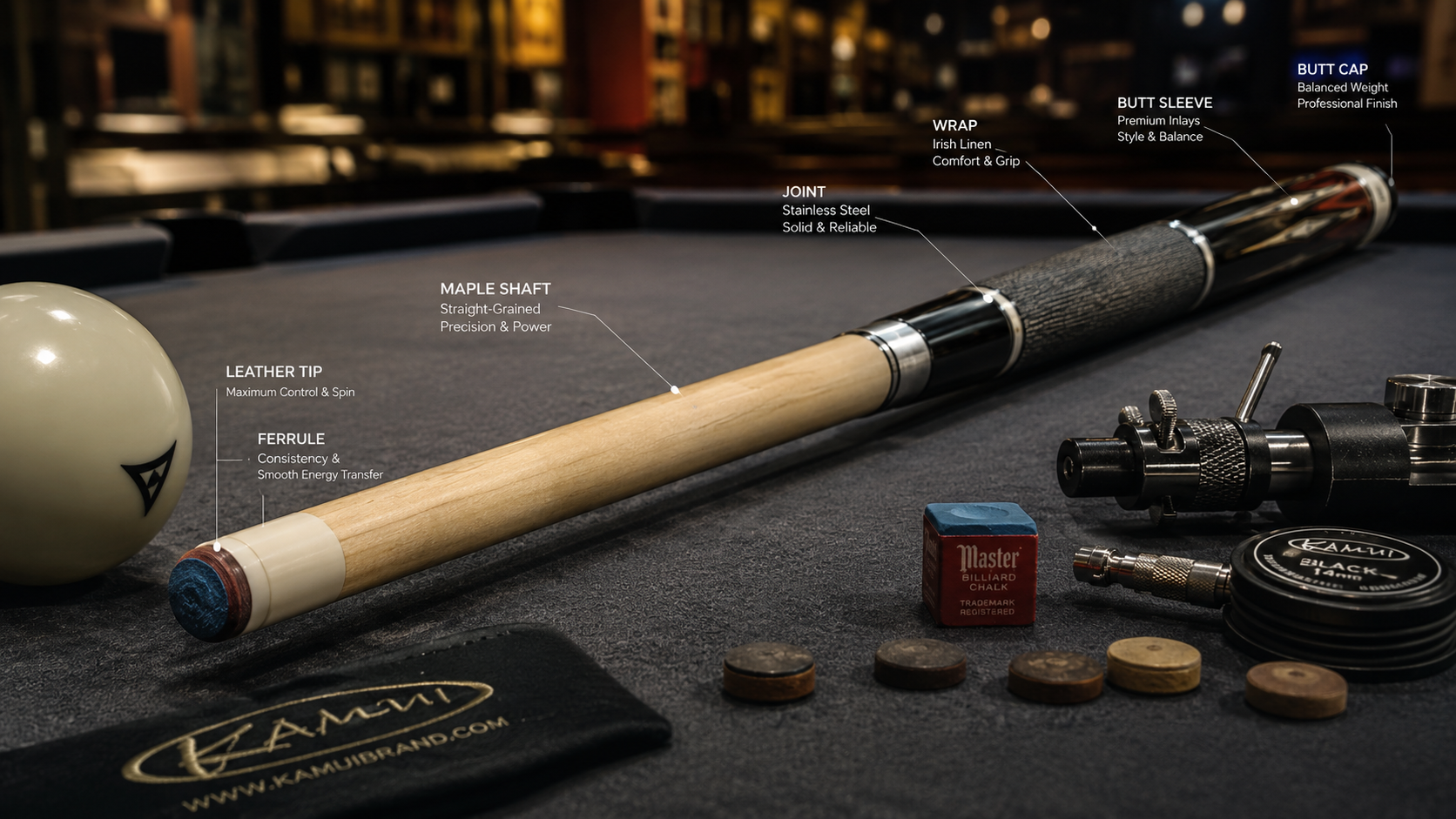
Whether you're a first-time player trying to understand why your shots feel inconsistent, or a seasoned competitor looking to dial in your equipment, understanding the anatomy of a pool cue is foundational knowledge. A cue is not simply a stick - it's a precision instrument, and every component has been engineered with a specific mechanical purpose.
This guide breaks down each part of the cue in detail: what it does, how it affects your game, what materials it's made from, and how to know when something isn't right.
1. The Cue Tip: Your Only Contact with the Game
The tip is the single most performance-critical component on your cue. It is, quite literally, the only part of your equipment that ever touches the cue ball - and that contact lasts for only a fraction of a millisecond. Everything you communicate to the cue ball - speed, spin, draw, follow, english - happens in that fleeting moment. If you're seeing any of these signs, professional cue tip replacement is the most reliable fix.
Tip Hardness and What It Actually Means
Tips are graded by hardness, and the difference is more significant than most casual players realize.
Soft tips compress more upon contact, which increases the dwell time - the brief moment the tip stays in contact with the cue ball. This allows you to apply more spin with less precise aim, making them popular among players who rely heavily on english. The tradeoff is durability: soft tips mushroom and flatten faster and require more frequent maintenance.
Medium tips offer a balanced compression. They're the most widely used across all skill levels and are the safest choice for most players. They provide reasonable spin capability, predictable feedback, and decent longevity.
Hard tips compress very little, transferring energy more directly and producing a firmer, crisper hit. They last longer between replacements, but they demand more precise cueing - a slightly off-center hit on a hard tip is far more likely to miscue than on a soft one. Many power players and straight-pool specialists prefer them.
Layered (laminated) tips are constructed from multiple thin layers of leather bonded together. They hold their shape significantly better than single-piece tips, maintain a consistent compression level across their lifespan, and are the preferred choice of most serious competitive players.
Not sure which hardness is right for your game? Our guide to choosing the right cue tip walks you through it in detail.
Tip Shape and Maintenance
A properly shaped tip should have a rounded profile, typically matching the curvature of a nickel or dime. A tip that has gone flat loses its ability to hold chalk, dramatically increasing miscue risk. A mushroomed tip - where the edges flare out beyond the ferrule - causes inconsistent ball contact and needs to be trimmed back.
Regular maintenance with a tip pick (to roughen and restore texture), a shaper (to maintain proper radius), and consistent chalking will extend the life of any tip and keep it performing at its best.
Signs You Need a New Tip
- The tip is flattened and won't hold chalk even after scuffing
- The tip has mushroomed past the edges of the ferrule
- The tip has become glazed, hard, and slick
- You're experiencing miscues on shots that should be routine
- The tip is thin enough that the ferrule is close to contacting the ball
A poorly installed tip - even a high-quality one - can compromise all of the above. The tip must be precisely centered on the ferrule, cleanly bonded with no gaps, and properly shaped before it ever strikes a ball. This is why professional installation matters.
2. The Ferrule: The Unsung Structural Component
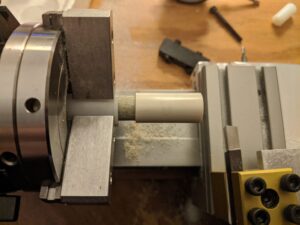
The ferrule is a short cylindrical collar, typically 1 inch in length, that sits between the tip and the shaft. Most ferrules are made from synthetic ivory, carbon fiber, or engineered plastics like melamine - each offering different hardness and energy transfer characteristics.
 What It Actually Does
The ferrule serves two functions that are easy to underestimate:
Structural protection: The striking end of the shaft bears tremendous repetitive stress. Without a ferrule, the wood would eventually split or crack from the impact. The ferrule distributes that force and keeps the shaft intact.
Energy transfer: The hardness of the ferrule affects how energy moves from the shaft to the cue ball. A harder ferrule transfers energy more crisply; a softer or more flexible ferrule can slightly dampen the hit. This is why advanced players sometimes have strong opinions about ferrule material - it's a real, if subtle, variable in cue feel.
When to Replace It
Ferrules can develop hairline cracks, chips, or surface discoloration over time. A cracked ferrule is not just cosmetic - it can cause inconsistent ball contact and, if ignored, allow damage to migrate into the shaft. Whenever a tip is replaced professionally, the ferrule should be inspected and replaced if needed. If you're in Central Massachusetts, we handle both as part of our cue tip replacement service.
3. The Shaft: The Engine of Your Accuracy
The shaft is the tapered upper half of the cue, running from the ferrule down to the joint. It is arguably the most technically sophisticated component of the cue, and the one most responsible for the accuracy and feel of your shot.
Taper Profiles
The shaft tapers from its widest point at the joint end down to the tip end. The geometry of that taper has a profound effect on shot behavior.
Pro taper shafts maintain a consistent diameter for the first 12–16 inches before beginning their final taper toward the tip. This provides a stable, consistent feel through the stroke and is the preferred design for most serious players.
European taper (also called a conical taper) begins tapering immediately from the joint. The feel is different - some players describe it as livelier or more responsive, while others find it harder to control.
Tip diameter (also called the joint diameter or "bore") typically ranges from 11mm to 13mm. Smaller diameter tips (11–12mm) require more precision but can deliver greater spin; larger tips (12.75–13mm) are more forgiving and common on break cues.
Low-Deflection Shafts
Traditional shafts cause a phenomenon known as cue ball deflection (sometimes called "squirt") - when you hit the cue ball off-center to apply english, the ball deflects slightly away from your aim line. This is physics: the shaft is pushing the ball sideways as well as forward.
Low-deflection (LD) shafts address this through a combination of design choices: thinner walls, lighter tip sections, and in carbon fiber variants, fundamentally different materials. With an LD shaft, you can aim more directly at your target even when applying side spin, rather than needing to compensate with an adjusted aim point.
For players who use english frequently, especially in competitive settings, the switch to a low-deflection shaft can be transformative - but it requires an adjustment period, since your previously learned compensation habits now work against you.
Shaft Materials
Hard maple remains the gold standard for traditional shafts. It's dense, consistent, and provides a familiar feedback that most players grow up learning on.
Carbon fiber shafts have become increasingly popular at higher levels of play. They are extremely low-deflection, virtually immune to warping from humidity changes, and maintain their straightness over time. The hit feels different - some describe it as slightly hollow or muted compared to wood - but many players adapt quickly and appreciate the consistency.
Laminated and composite shafts fall in between, using layered wood construction or hybrid materials to achieve improved straightness and consistency over solid wood while retaining a more traditional feel.
Shaft Maintenance
A dirty shaft is a surprisingly common cause of performance problems. Chalk, skin oils, and environmental grime build up on the surface and create uneven friction as the cue slides through your bridge hand. This disrupts stroke consistency in ways that are hard to identify.
Clean your shaft regularly with a slightly damp cloth and a dedicated shaft conditioner. Avoid furniture polish or silicone-based products - they can penetrate the wood and permanently alter its feel. For wooden shafts, ultra-fine steel wool (0000 grade) used lightly along the grain can restore a smooth, clean surface.
4. The Joint: Where Precision Meets Preference
The joint is the connection point between the shaft and the butt. On a two-piece cue, this is where the cue screws together - and the construction of this connection has a significant influence on the overall feel of the cue.
Joint Materials and Their Effects
Stainless steel joints produce a solid, consistent connection and are extremely durable. Many players describe the hit as firm and direct.
Brass joints are softer than steel and can impart a slightly warmer feel. They are common on mid-range cues.
Phenolic joints are extremely hard and rigid, transferring energy very efficiently. They're common on break cues where power transfer is the priority, and increasingly found on playing cues for players who want a very precise, crisp hit.
Wood-to-wood joints eliminate metal entirely, using interlocking wooden pins. The feel is notably different - softer, more organic, and preferred by players who find metal joints harsh. Many vintage and hand-crafted cues use this construction.
Thread Patterns
Joints also vary by thread type: 5/16 x 18, 5/16 x 14, 3/8 x 10, Uni-Loc, and others. This matters practically because it determines shaft interchangeability - different thread standards are not cross-compatible. If you're buying additional shafts or having repair work done, confirming your thread specification avoids compatibility issues.
Maintaining Your Joint
Keep the joint threads clean and free of chalk or debris. A loose or worn joint causes vibration and deadens the feedback you should feel from every shot. If your joint has developed play or wobble, have it inspected - this is not a problem that resolves on its own.
5. The Butt: Balance, Weight, and Identity
The butt is the lower, thicker half of the cue. While it never contacts the ball, it plays a central role in how the cue feels in your hand and how it moves during your stroke.
Weight and Balance
Most playing cues range from 18 to 21 ounces, with 19–20 ounces being the most common. Weight preference is genuinely personal: heavier cues can feel more stable and require less effort on power shots, while lighter cues allow faster stroke speed and are often preferred for finesse-heavy games like snooker.
The balance point of the cue - where it rests horizontally without tipping - affects how it swings. A forward-balanced cue (balance point closer to the tip) can feel "tip-heavy" and different to stroke than a rear-balanced one. Neither is objectively better; it comes down to your stroke mechanics.
Many cues feature an adjustable weight bolt system inside the butt, accessible through the bumper. This allows players to fine-tune the cue's weight within a range (often ±2–3 ounces) using additional weights, without needing to purchase a new cue.
Butt Materials and Construction
High-end butts are typically constructed from hardwoods - maple, ebony, cocobolo, bocote, and other exotic species. The wood choice affects aesthetics but also density and feel. Butts often feature intricate inlay work in wood, metal, or shell - these are primarily decorative, but craftsmanship here is a strong indicator of overall cue quality.
6. The Wrap: Grip, Comfort, and Control
The wrap covers the grip area of the butt, providing texture and moisture management during play.
Wrap Types
Irish linen is the traditional standard. It's breathable, provides excellent grip, and develops a slight patina with use. Many competitive players prefer linen for its classic feel and long lifespan when properly maintained.
Leather wraps offer a softer, more cushioned feel. They tend to be more forgiving on the hand during long sessions but can become slick when worn.
Rubber wraps provide maximum grip and are often found on break cues, where the stroke is more forceful and the grip pressure higher.
Wrapless (bare wood) handles are increasingly popular, particularly among players who prefer a more direct connection to the cue. A well-finished maple grip with a light satin coating can feel incredibly clean - though it requires dry hands to maintain control.
7. The Butt Cap and Bumper: Small Parts, Real Purpose
The bumper at the base of the cue is typically made from rubber or a hard plastic compound. It protects the cue when placed upright or accidentally dropped - seemingly minor, but accumulated impacts on an unprotected butt end can damage the wood or displace internal weight components.
On cues with adjustable weight systems, the bumper is usually removable to allow access to the weight bolt cavity.
The Whole System: How the Parts Work Together
Understanding each part individually is useful, but the real insight comes from seeing how they interact as a system.
When you strike the cue ball, the mechanical chain is: stroke force → shaft flex and deflection → ferrule energy transfer → tip compression and grip → cue ball response.
A mis-match anywhere in this chain creates problems. A soft tip on a very stiff carbon fiber shaft might feel jarring. A heavy butt combined with a light shaft creates unusual balance that disrupts stroke timing. A worn joint introduces vibration that masks the feedback you rely on.
This is why experienced players develop very specific equipment preferences - they're not being fussy, they're optimizing a system where every variable is genuinely connected.
When to Seek Professional Cue Repair
Some maintenance tasks are well within reach of any attentive player: cleaning the shaft, chalking the tip properly, wiping down the wrap. But certain repairs require proper tools, technique, and experience to do correctly.
Professional tip replacement ensures the tip is properly centered, fully bonded across the entire contact surface, correctly shaped to the right radius, and matched to your ferrule. A DIY tip job that comes loose mid-game, sits off-center, or is installed with too much or too little adhesive can ruin a match and damage the ferrule.
Ferrule replacement should be done any time there's visible cracking or significant wear, and always in conjunction with a tip replacement - the two components work together.
Shaft straightening and refinishing is best left to professionals. A warped shaft is not always visible to the naked eye; checking it requires rolling it on a flat surface or using a straightedge.
At Billiard Greg Cue Repair, we bring professional-level care to every job - from tip replacement and shaping to full cue inspection and maintenance. If you're unsure whether your cue needs attention, we're happy to take a look and give you an honest assessment.
Contact us to schedule a tip replacement or cue inspection.