If you read through how to tell if your pool cue is warped, you already know the word "reconditioning" comes up as the fix for minor to moderate warp. But I never actually walked through what that process looks like - and if you're about to hand over a cue you care about, you should know what's happening to it before it happens.
So here's the real answer: what shaft reconditioning is, what it can and can't fix, what it costs, and how to decide whether it's the right call for your cue.
What Reconditioning Actually Fixes
Shaft reconditioning covers a few overlapping problems, and it's worth being specific about which ones apply to your cue, because the process shifts depending on what you're dealing with.
Minor to moderate warp. This is the one most players think of first, and it's the one covered in detail in the warp article. A shaft that rolls with a slight wobble or shows a gentle arc when you sight down it is often a good candidate for straightening.
Surface degradation. Years of chalk dust, hand oils, and general grime don't just sit on top of a shaft - they work into the wood grain over time, and they change how the shaft feels in your bridge hand. A shaft that feels sticky, dull, or inconsistent as it slides through your fingers is a shaft that's overdue for refinishing, warp or no warp.
Dead or dinged surface. Nicks, dents, and small compressions in the wood from years of play round out the list. None of these are catastrophic on their own, but they add up, and they're part of what makes an older shaft feel "worn out" compared to a fresh one.
What reconditioning doesn't fix. I want to be upfront here, because I'd rather set the right expectation than oversell a service. Reconditioning won't fix a cracked shaft, won't correct significant warp in a shaft that's already structurally compromised, and won't do anything for a joint or alignment problem - if your three-part rolling test from the warp article points to the joint or the butt, reconditioning the shaft isn't the answer. That's a different repair path entirely.
The Process, Step by Step
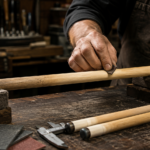
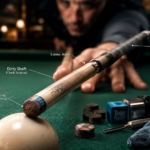
- Assessment first. Before anything touches the wood, the shaft gets checked the same way described in the warp article - rolled on a flat surface, sighted down for arc, and inspected for surface condition. This tells me whether we're dealing with a genuine straightening job, a surface-only refinish, or both.
- Straightening, if needed. For a shaft with real warp, the traditional method is controlled heat and pressure. The wood fibers that have taken a set from moisture or stress are gently coaxed back toward straight - heated just enough to make the fibers pliable, then held under pressure while they cool and reset. This is a slow, patient process, not a quick bend-and-done fix. Rushing it is how you crack a shaft or introduce a new warp somewhere else.
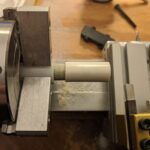
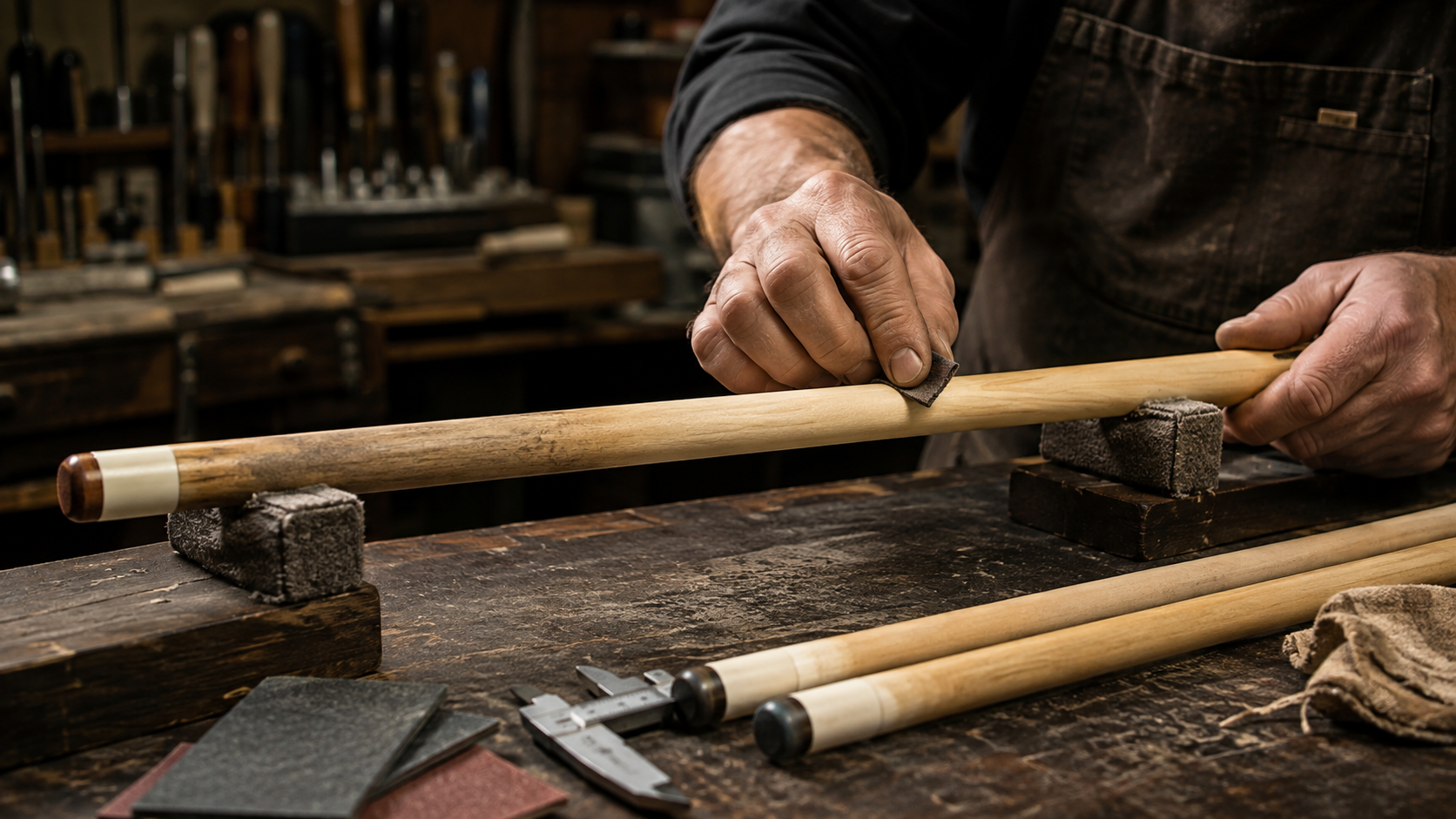
- Sanding progression. Once the shaft is straight (or if it was already straight and just needed surface work), it goes through a graduated sanding process - coarser grit first to remove damage, dings, and the compressed outer layer, then progressively finer grits to bring the surface back to smooth. This is where a lot of the "feel" of an old, dead shaft gets restored. You're removing the dull, compressed layer that's built up over years and exposing fresh wood underneath.
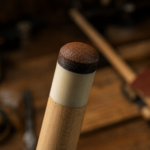
- Burnishing and refinishing. The final pass brings the surface back to a smooth, consistent finish - the kind of glassy-but-not-slick feel a shaft has when it's new. Depending on the shaft's original finish, this might involve a light wax or sealant application to protect the wood and restore the right amount of glide through your bridge hand.
- Final check. Rolled and sighted one more time to confirm straightness, then a feel check - running a hand down the shaft to make sure the surface is even and consistent from the joint to the ferrule.
The whole thing is hands-on, judgment-heavy work. There's no machine setting that tells you when a shaft is straight enough or when you've sanded enough material off - it's done by eye, by feel, and by experience with how different woods respond.
Reconditioning vs. New Shaft
This is the question that actually matters most, and it depends on a few honest factors.
Reconditioning makes sense when:
- The warp is minor to moderate, not severe
- The shaft isn't cracked or structurally compromised
- You have an attachment to this specific shaft - grain pattern, feel, history with the cue
- The shaft is otherwise in good shape aside from the warp or surface wear
A new shaft is the better call when:
- The warp is significant, or the shaft has already been reconditioned once before and warped again
- There's visible cracking, splitting, or heat damage from a prior warp event
- The shaft has been sanded down repeatedly over the years and is running thin on material
- You're dealing with a lower-end shaft where a replacement costs about the same as reconditioning anyway
I'll always give you an honest read on which category your shaft falls into during the initial assessment. There's no benefit to me reconditioning a shaft that's going to warp again in six months - that's a bad outcome for both of us.
What It Costs and How Long It Takes
Pricing depends on how much work the shaft actually needs - a straightforward surface refinish costs less than a full straightening-plus-refinish job. As a general range, expect surface-only reconditioning to run toward the lower end and a full straightening job with refinish toward the higher end. I'll give you a firm number after I've actually looked at the shaft, since guessing at cost without seeing the cue rarely does anyone favors.
Turnaround is typically similar to a tip replacement - often within about a week, longer if the shaft needs an extended straightening period to properly set. Straightening isn't something you can rush without risking the work itself, so I won't compress that timeline just to get a cue back to you faster.
How Often a Shaft Should Be Reconditioned
For most casual and league players, a shaft simply doesn't need reconditioning on any kind of schedule - it's a response to a specific problem (warp or surface degradation), not routine maintenance like tip care.
That said, if you're a regular competitor putting a lot of hours on the same cue, a periodic surface refinish - separate from any straightening - can keep the shaft feeling consistent year over year, particularly if you're storing or transporting the cue through New England's humidity and temperature swings the way the warp article covers in detail. Players who've had one warp event are also more likely to see it again if storage habits don't change, so reconditioning is often paired with a conversation about a hard case and vertical storage going forward.
If you're not sure where your shaft stands, that's exactly what the initial assessment is for.
Frequently Asked Questions
How much does shaft reconditioning cost? It depends on whether the shaft needs a surface-only refinish or a full straightening plus refinish. I provide an honest, specific estimate after inspecting the shaft in person - pricing without seeing the cue isn't something I'll guess at.
How long does shaft reconditioning take? Most jobs are completed within about a week, similar to a tip replacement. Shafts that need a full straightening process may take longer, since rushing that step risks the shaft warping again or cracking.
Can any warped shaft be reconditioned? No. Minor to moderate warp in a solid wood shaft is generally a good candidate. Significant warp, cracked shafts, or shafts that have already been reconditioned once and warped again usually point toward a new shaft being the smarter investment.
Does reconditioning change the shaft's diameter or taper? The sanding process removes a small amount of material, but it's done carefully to preserve the original taper profile as closely as possible. If a shaft has already been sanded down significantly over its life, there's a limit to how much more material it can safely lose before it's too thin.
Will reconditioning make my cue feel different? Often, yes - in a good way. Removing years of compressed grime and restoring a smooth, consistent surface tends to bring back the crisp, clean feel a shaft had when it was new. If your cue has felt "dead" for a while, reconditioning is frequently the fix, even when warp was never the issue.
Is reconditioning a DIY project? No. Straightening in particular requires controlled heat and pressure applied correctly, and getting it wrong can crack the shaft or introduce a new warp. This is one repair worth leaving to someone with the tools and experience to do it right.